

An Invention Returns to the Wrist
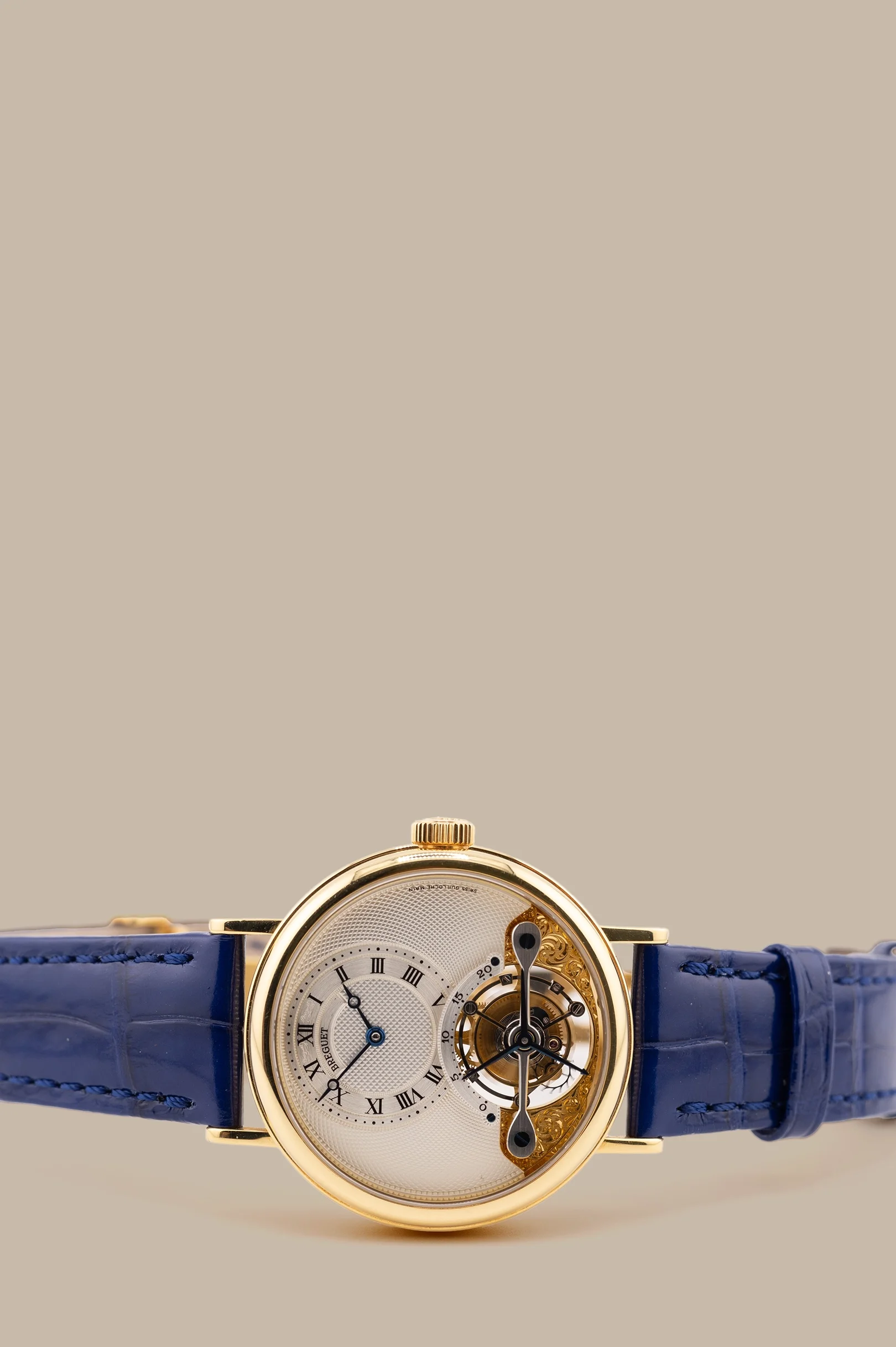
The Classique Tourbillon 3357 emerged during the 1990s as a continuation of reference 3350, introduced in 1988 under Daniel Roth’s direction. That earlier watch had brought Breguet’s defining invention into a wristwatch, reconnecting the revived manufacture with its founder’s work. The 3357 retained its compact architecture and offset display, developing an established design rather than seeking a new identity. Its precise introduction year remains unconfirmed.
Breguet Classique Tourbillon
Reference 3357BA/12/986 | Yellow Gold I 2002
Classical Proportions, Changing Light.
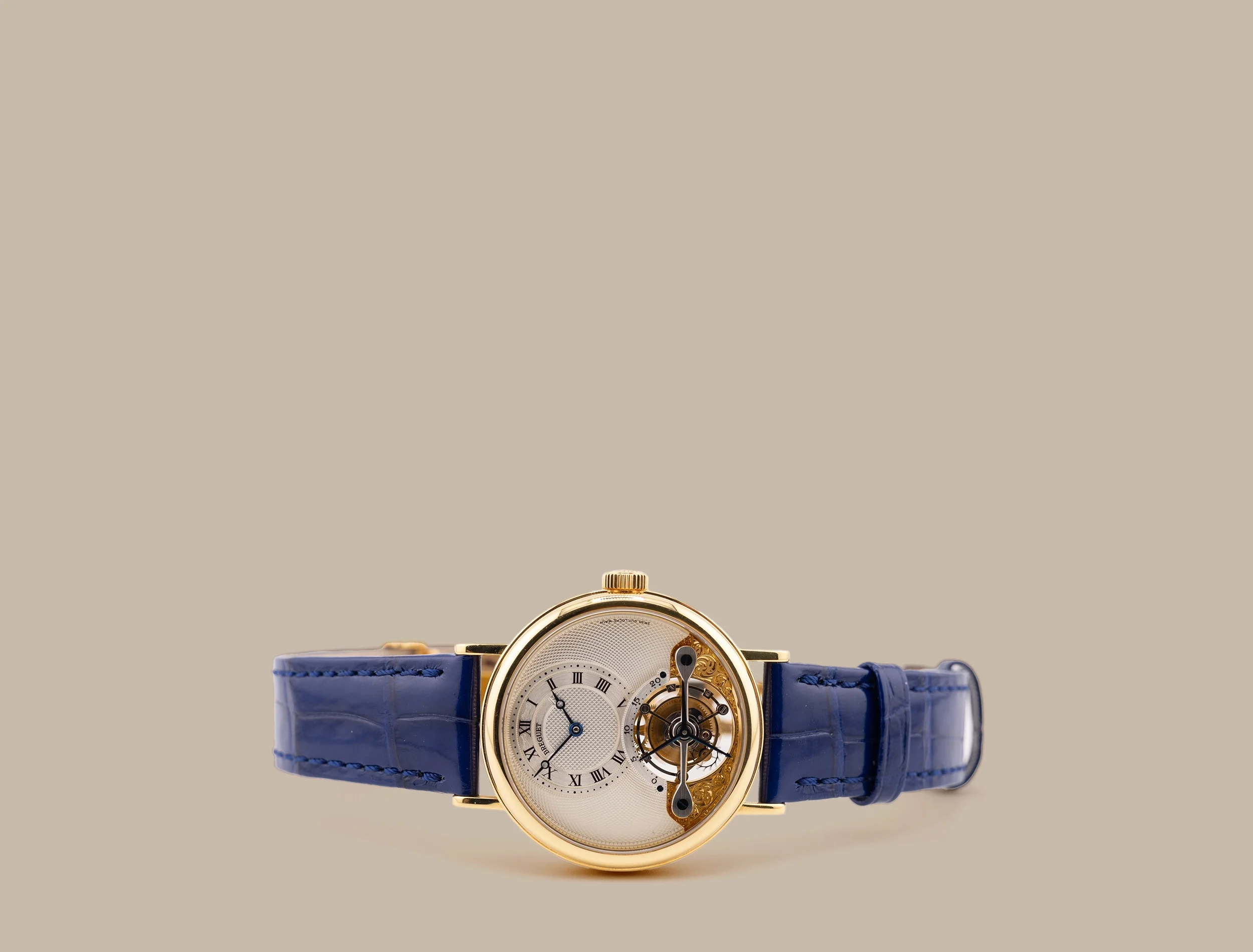
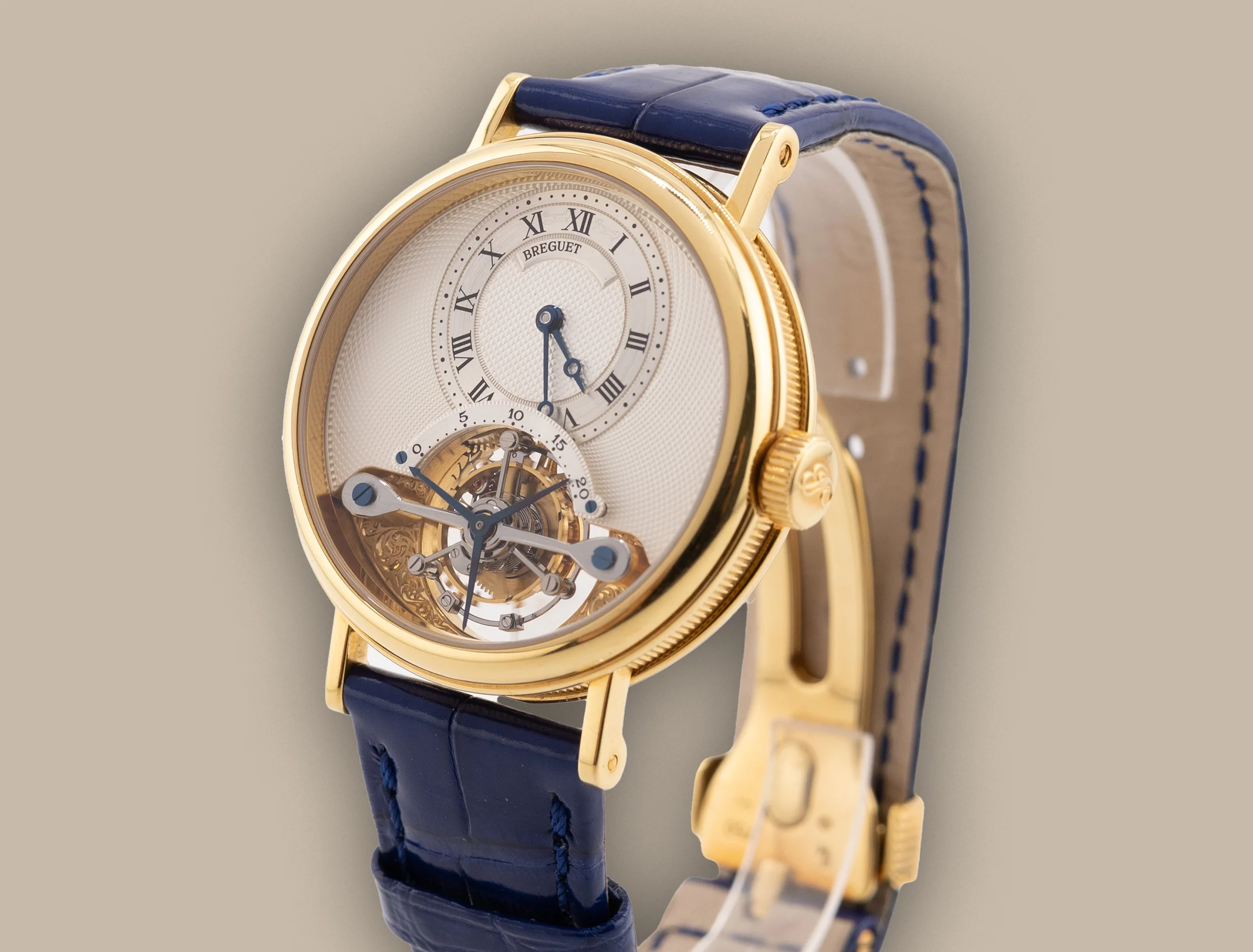
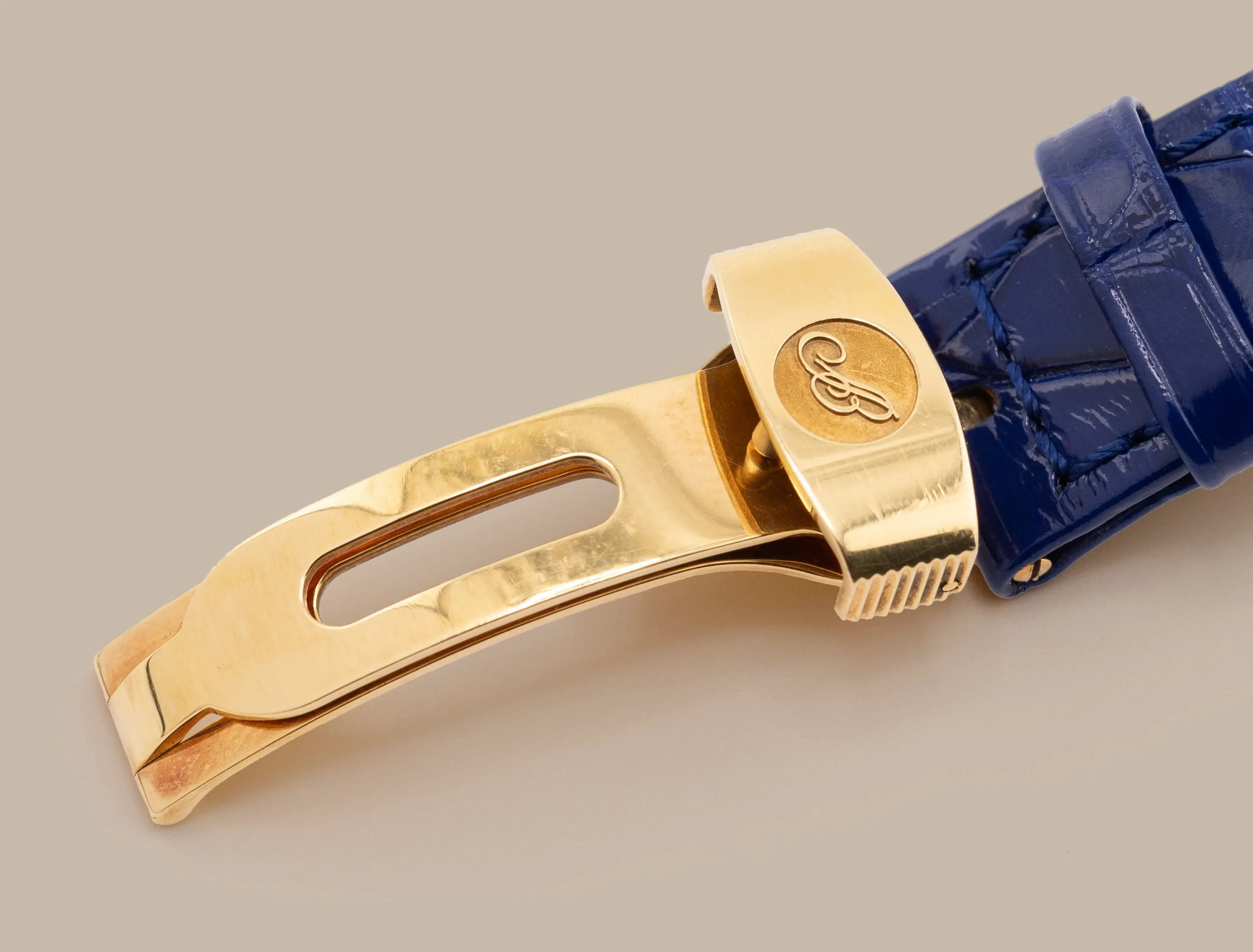
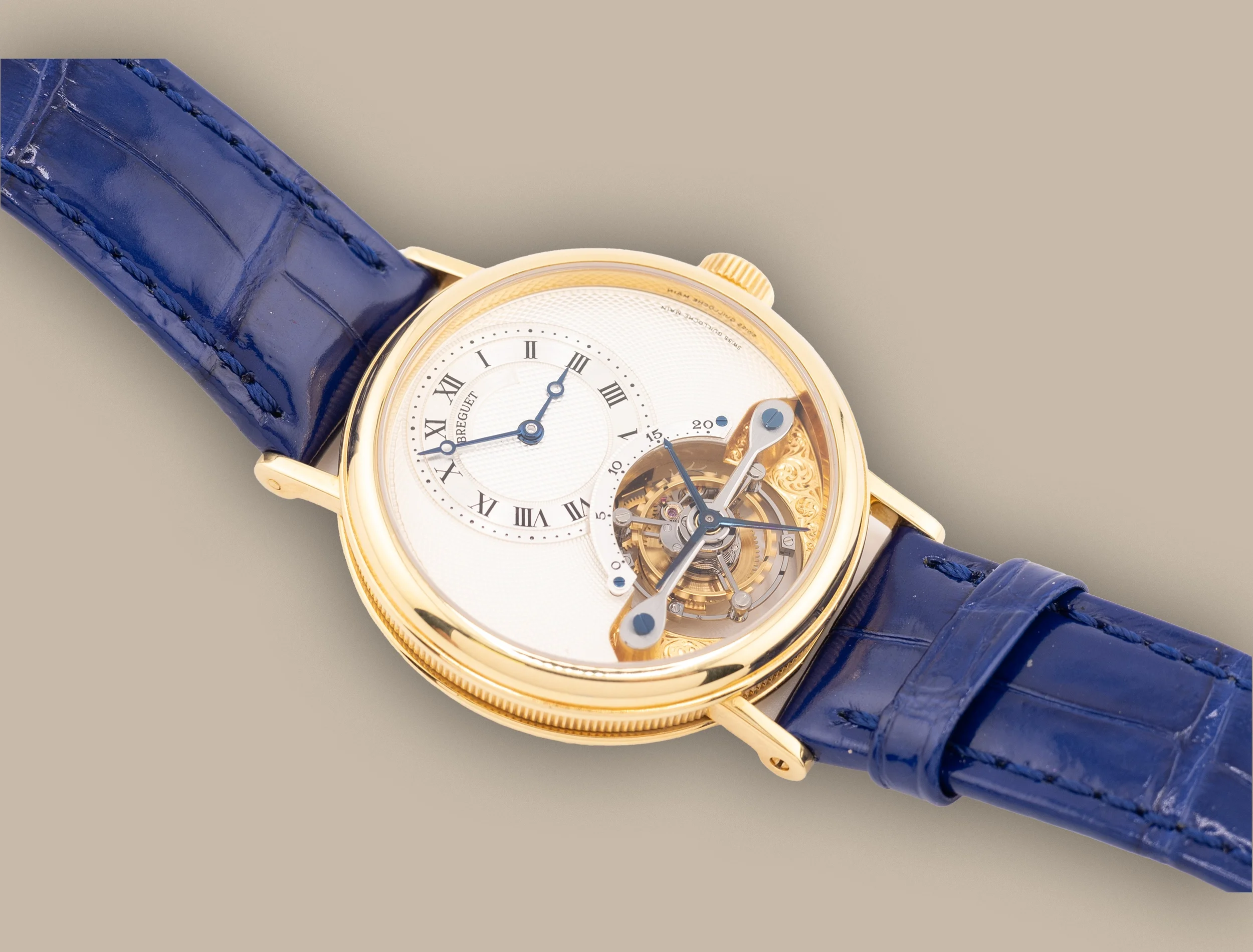
In yellow gold, the approximately 35mm case measures just 9.15mm thick, its rounded bezel framed by straight lugs and a fluted caseband. The silvered solid-gold dial draws attention first towards the tourbillon, then towards the contrasting guilloché surrounding the raised hours-and-minutes display. On this example, the blue strap echoes the blued hands, while a Breguet folding clasp completes the ensemble. Changing light brings depth to an otherwise restrained composition.
-
Year:
Circa 2002; warranty dated 2002Case Material:
18-carat yellow gold, with a fluted caseband and straight lugs.Case Dimensions:
Approximately 35mm diameter × 9.15mm thickness.Dial Description:
Silvered solid-gold dial with hand-cut guilloché, an off-centre Roman-numeral chapter ring, blued-steel Breguet hands and an exposed tourbillon with three-pointer seconds indication at 6 o’clock.Crystal:
Sapphire.Case back:
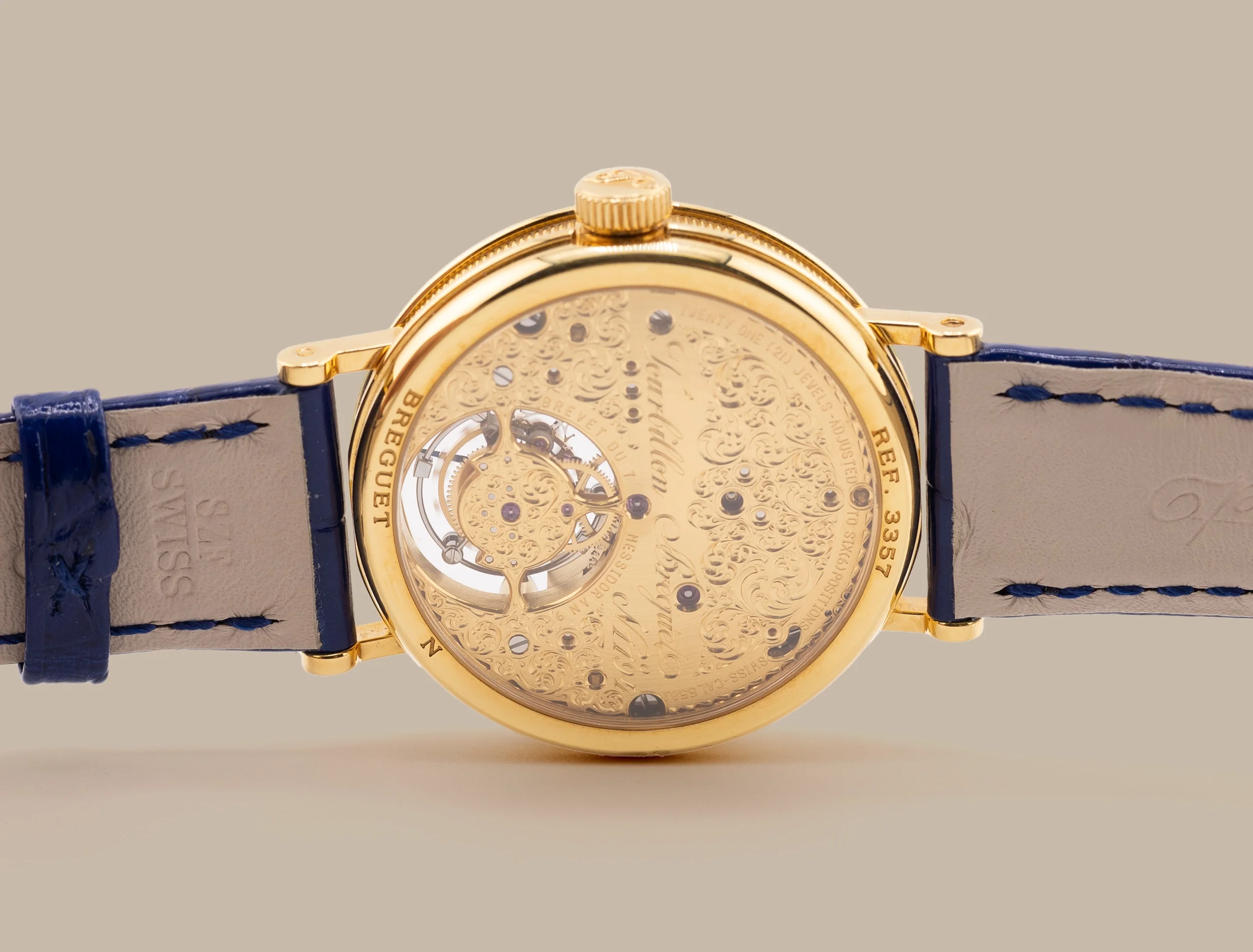
Sapphire display back revealing the hand-engraved gilt calibre 558.1.Strap:
Leather strapClasp:
18-carat yellow-gold Breguet folding claspWater resistance:
Originally rated to 30 metres / 3 bar -
Calibre:
Breguet 558.1, manually wound, developed from the Nouvelle Lémania-based calibre 558.Functions:
Hours, minutes and running seconds indicated on the tourbillon.Tourbillon:
One-minute rotation, visible at 6 o’clock. Three blued-steel pointers successively traverse a twenty-second scale, together indicating a complete minute.Power Reserve:
Approximately 50 hours when fully wound.Frequency:
18,000 vibrations per hour / 2.5 Hz.Jewels:
21Regulating System:
Free-sprung balance with a Breguet overcoil hairspring. The revised carriage and regulation distinguish the 558.1 from earlier versions of the 558.Adjustment:
The photographed movement is marked as adjusted to six positions.Finishing:
Gilt bridges extensively decorated with hand-engraved floral scrollwork, visible through the sapphire case back.Historical Inscription:
“Brevet du 7 Messidor An 9” commemorates the tourbillon patent granted to Abraham-Louis Breguet on 26 June 1801.Collector’s Note:
The calibre preserves the architecture developed during Breguet’s revival under Daniel Roth, while incorporating later technical revisions. Its individual hand engraving is a particular attraction -
The watch is complete with original warranty. No box
A Documented Example
The accompanying certificate records reference 3357BA/12/986 and a purchase date in 2002. It documents the sale, leaving the manufacturing date unresolved. A published example with closely neighbouring case and movement numbers supports comparison, but cannot establish early-production status. More tangible distinctions appear beneath the sapphire back: elaborate floral engraving, inscriptions recording 21 jewels and adjustment to six positions, and the patent dedication “Brevet du 7 Messidor An 9.” These details give the individual movement its character without implying a special edition.
The Mechanical Lineage
The photographed calibre 558.1 descends from the movement developed with Nouvelle Lémania during Roth’s years at Breguet. Manually wound, it combines approximately fifty hours of autonomy with a frequency of 18,000 vibrations per hour. Its revised tourbillon carriage and free-sprung balance distinguish this development from earlier 558 executions. Three blued pointers successively traverse a twenty-second scale, making the carriage’s one-minute rotation part of reading the time.
Continuity Within the Collection
The related skeletonised 3355 appeared in 1993; specialist research places the larger, 39mm reference 5357 in 2002. These branches explored transparency and increased scale while the 3357 maintained its intimate proportions. Purchased during the early Swatch Group years, this example preserves a mechanical lineage established before the 1999 acquisition. Its collector interest rests in that continuity: an evolved movement, traditional dial work and individually executed engraving within a remarkably enduring design.