
The Shape of the Movement
Rolex Day-Date 36 “Puzzle Dial”
Cartier Tank Cintrée Skeleton
Reference WHTA0022 | Platinum | 2025
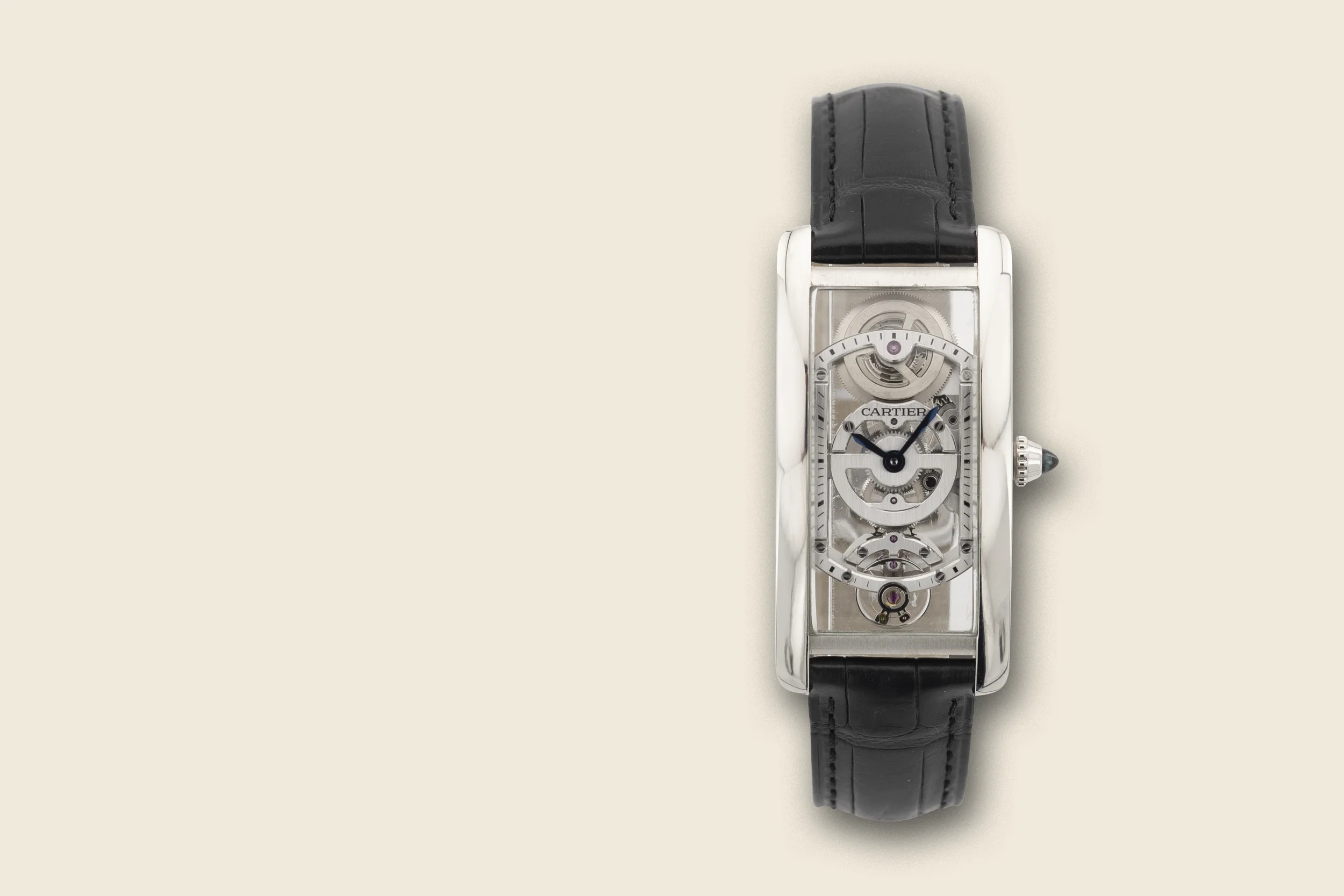
The Tank Cintrée is defined by its elongated, curved form. This skeleton interpretation carries that shape through to the manually wound movement, making the connection between case and mechanism visible from the outset.
-
Reference: WHTA0022
Year: 2025
Case: Platinum 950/1000
Case dimensions: 46.3 × 23 mm
Case thickness: approximately 9.08 mm
Dial: Skeletonised
Hands: Blued steel sword-shaped
Crown: Beaded, set with a sapphire cabochon
Crystal: Mineral
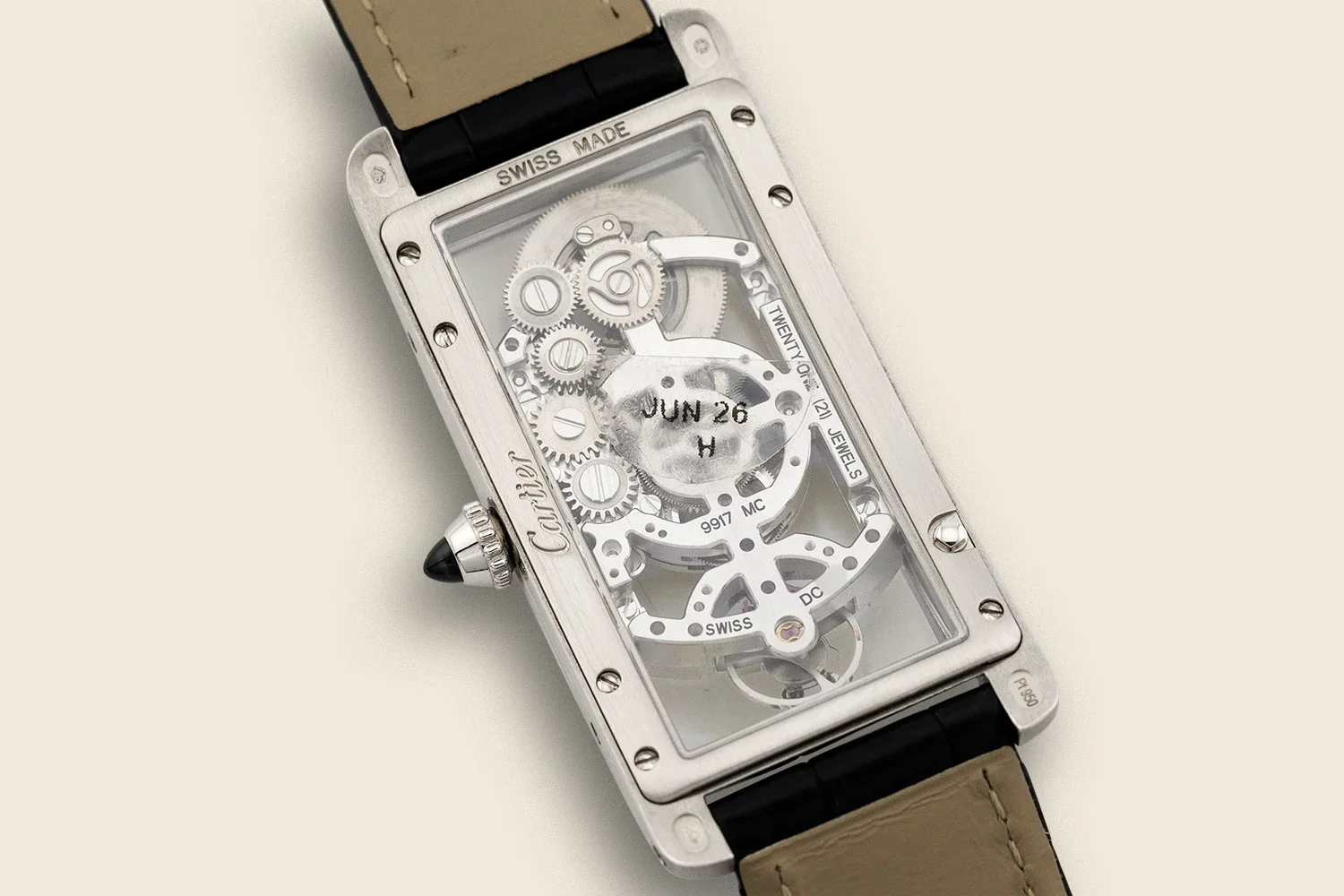
Case back: Sapphire crystal
Strap: Black alligator leather
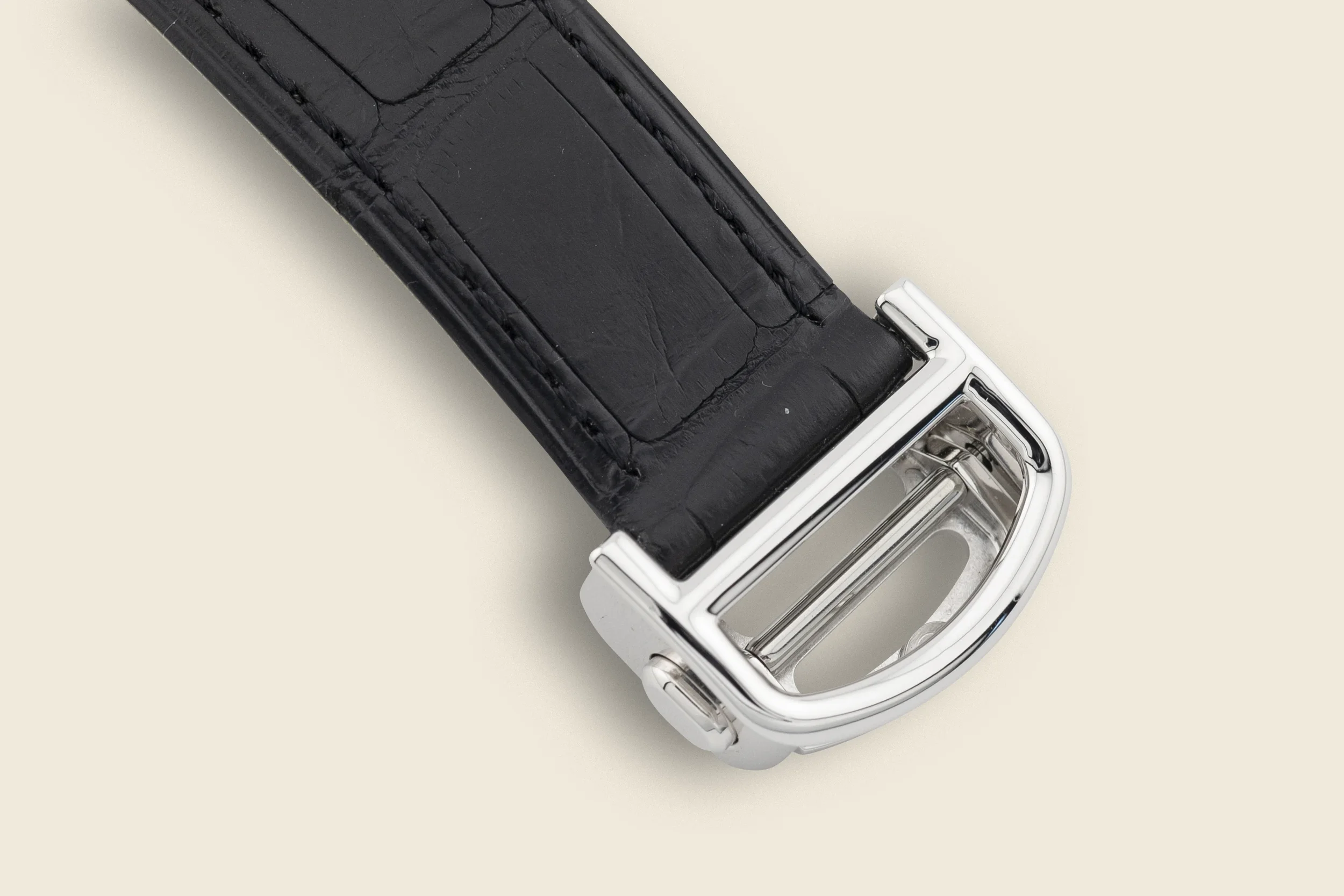
Buckle: Interchangeable 18K white gold deployant buckle
Water resistance: Up to 3 bar / approximately 30 metres
-
Calibre: Manufacture calibre 9917 MC
Winding: Manual
Functions: Hours and minutes
Power reserve: Approximately 60 hours
Frequency: 28,800 vibrations per hour (4 Hz)
Components: 142
Jewels: 21
-
Box & papers: Complete with box and papers
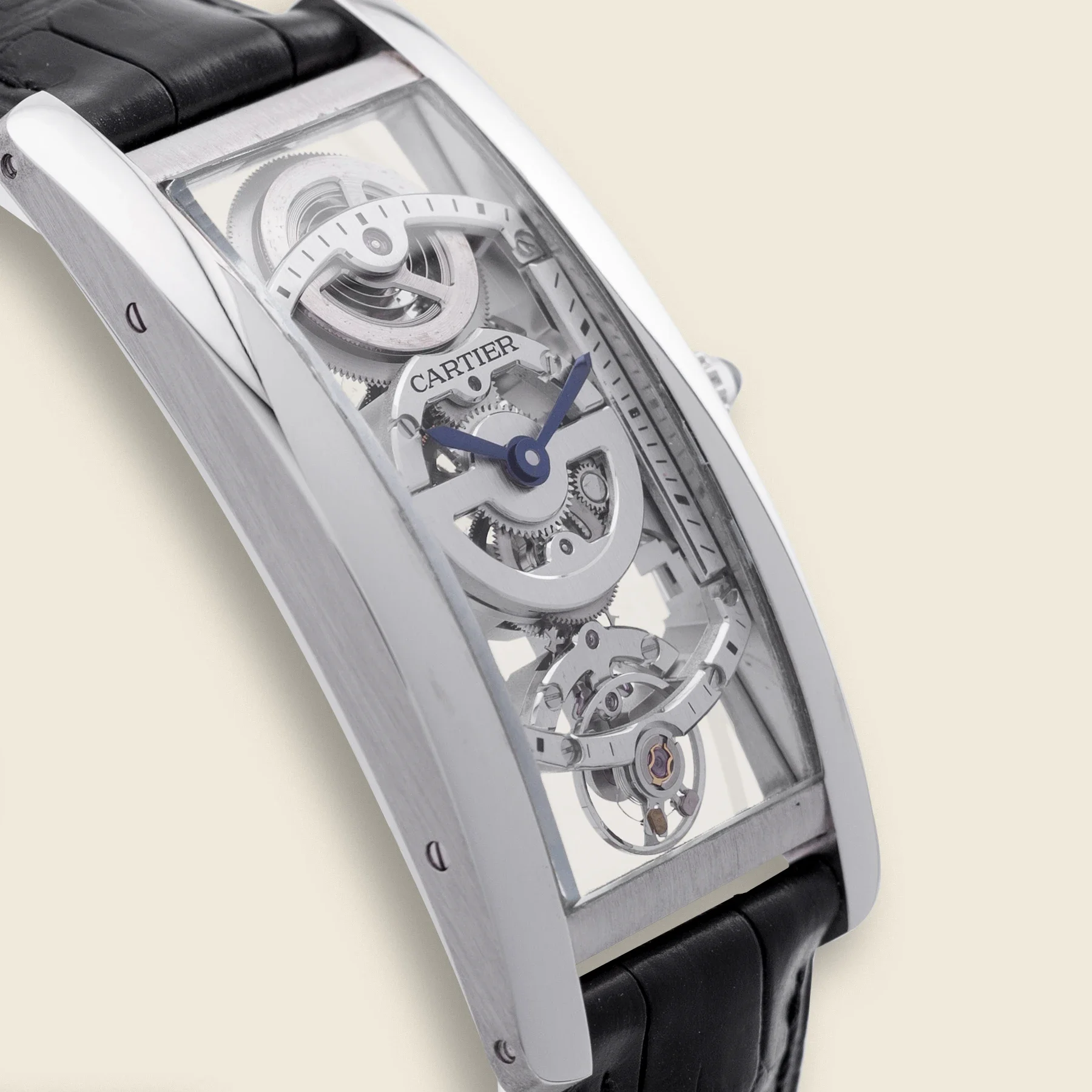
The curve of the case continues into the mechanism within. In this platinum Tank Cintrée, the movement becomes part of Cartier’s design language.
Open, Yet Composed
Blued steel sword hands provide a clear reference against the exposed movement. The sapphire cabochon crown introduces another small point of colour within the platinum setting.
The display remains limited to hours and minutes. That simplicity allows the eye to move between the hands, the movement and the long curve of the case without another complication interrupting the view.
Form Carried Through
The calibre 9917 MC is shaped and curved to follow the case. Rather than sitting behind a conventional dial, its open architecture forms the face of the watch.
That relationship gives the design its coherence. The outer silhouette and the structures within feel like parts of the same idea, with the barrel and balance contributing to the composition.
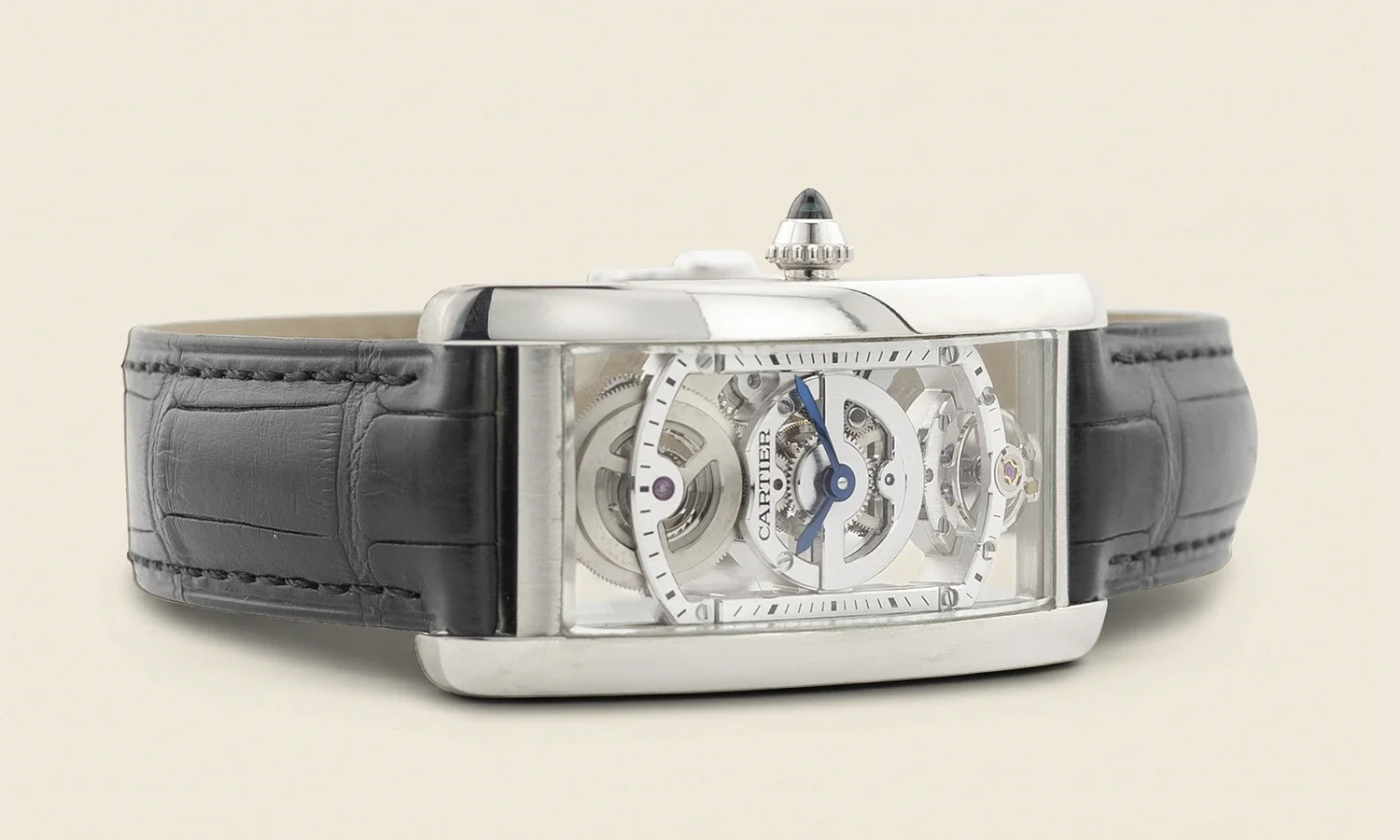
A Different Kind of Profile
The dimensions describe an unusually elongated watch, but the curve is equally important to its presence. Seen from the side, the Cintrée reveals a form that a front view alone cannot fully explain.
It is worth looking at it from several angles. The appeal rests as much in the relationship between shape and depth as in the open movement itself.