
From the Tank Cintrée to SIHH 2009
When Cartier introduced the Tank Américaine in 1989, it drew on the long, curved case of the 1921 Tank Cintrée. Two decades later, that silhouette became the setting for one of Cartier’s earliest manufacture complications. The hand-wound 9452 MC, Cartier’s first calibre to carry the Geneva Seal, debuted in the Ballon Bleu in 2008. At SIHH in 2009, the white-gold W2620007 brought it into the Tank family, placing the flying tourbillon at six o’clock within the Américaine’s elongated dial.
Curved White Gold and a Two-Level Dial
Reference W2620007 | 18K white gold | Circa 2009
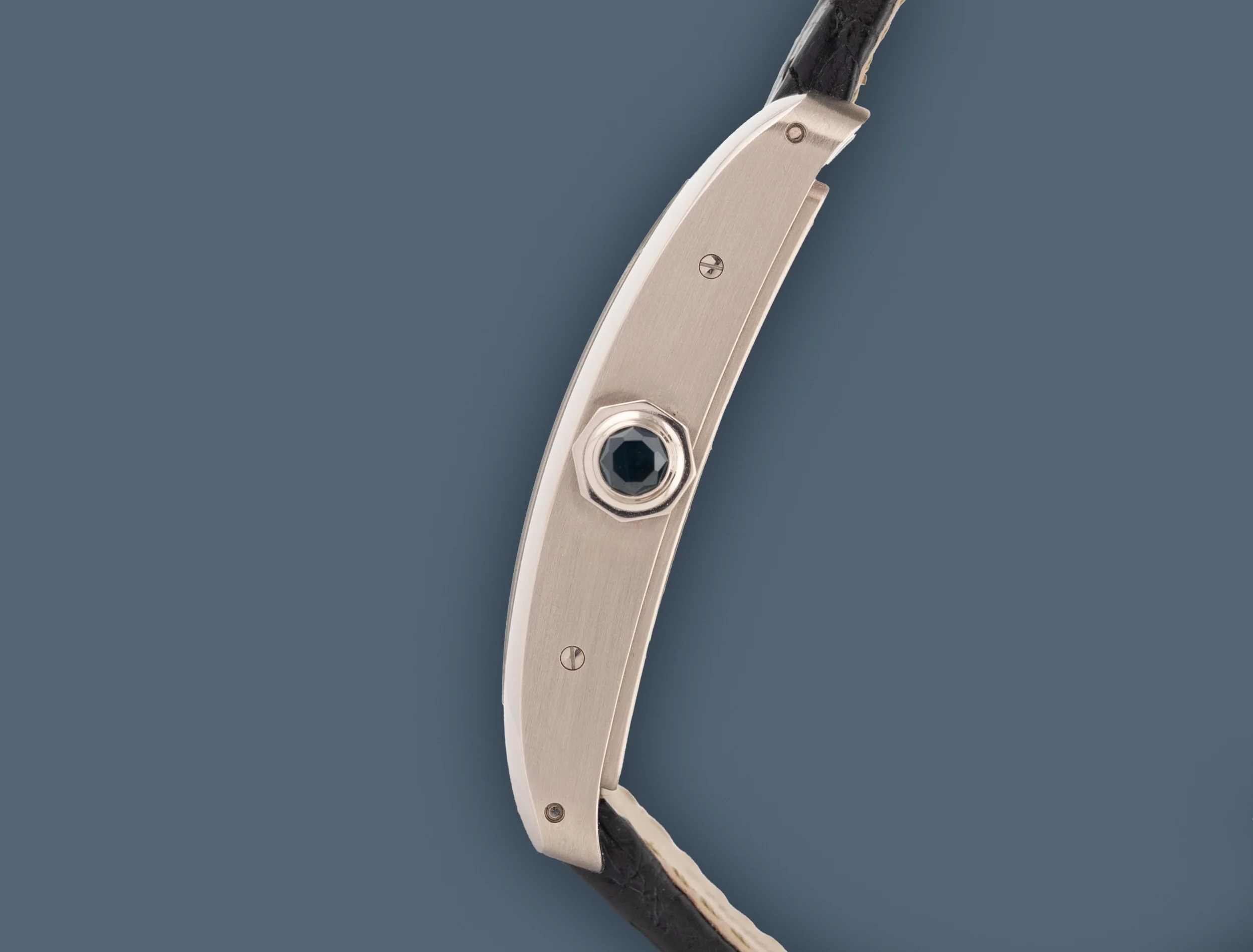
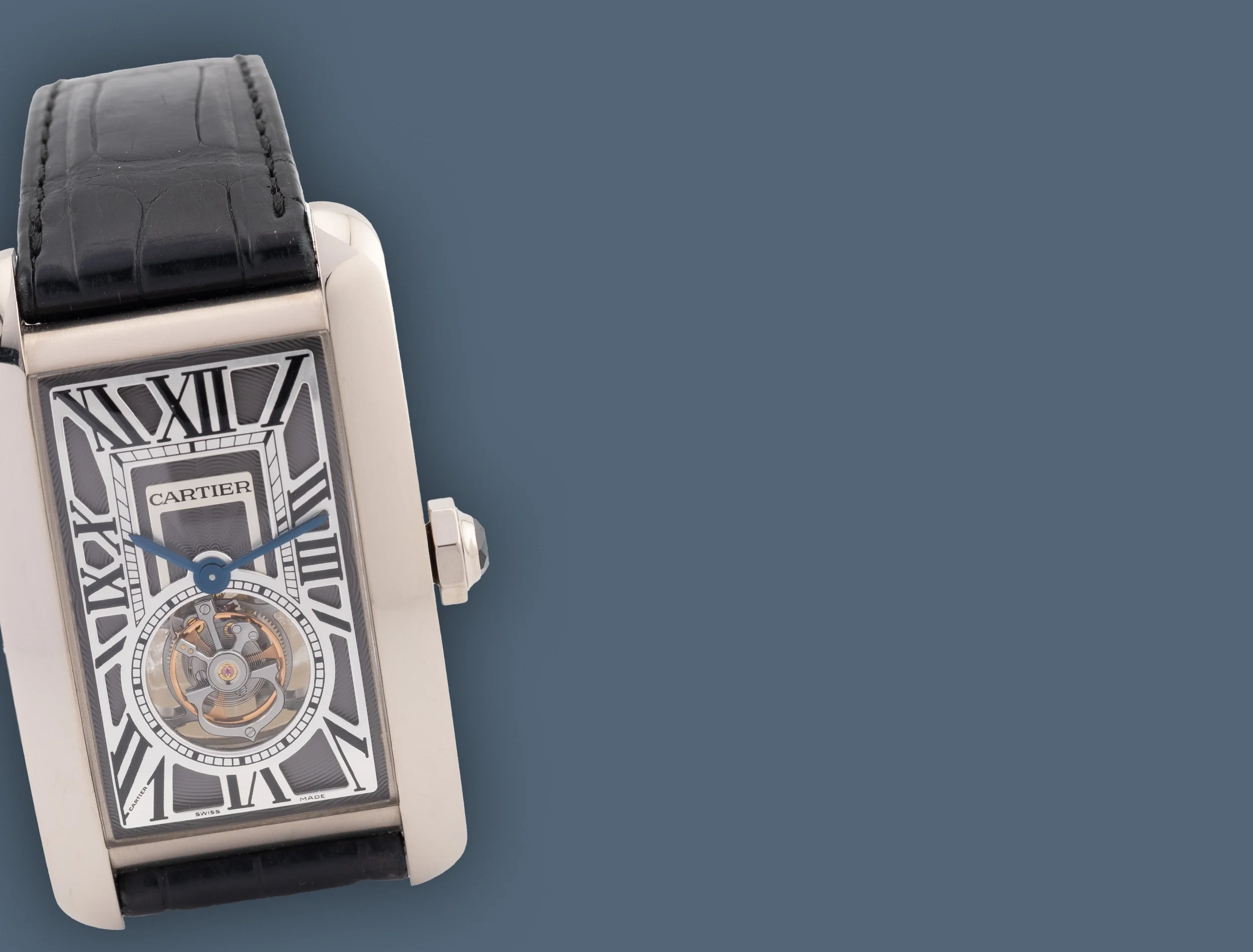
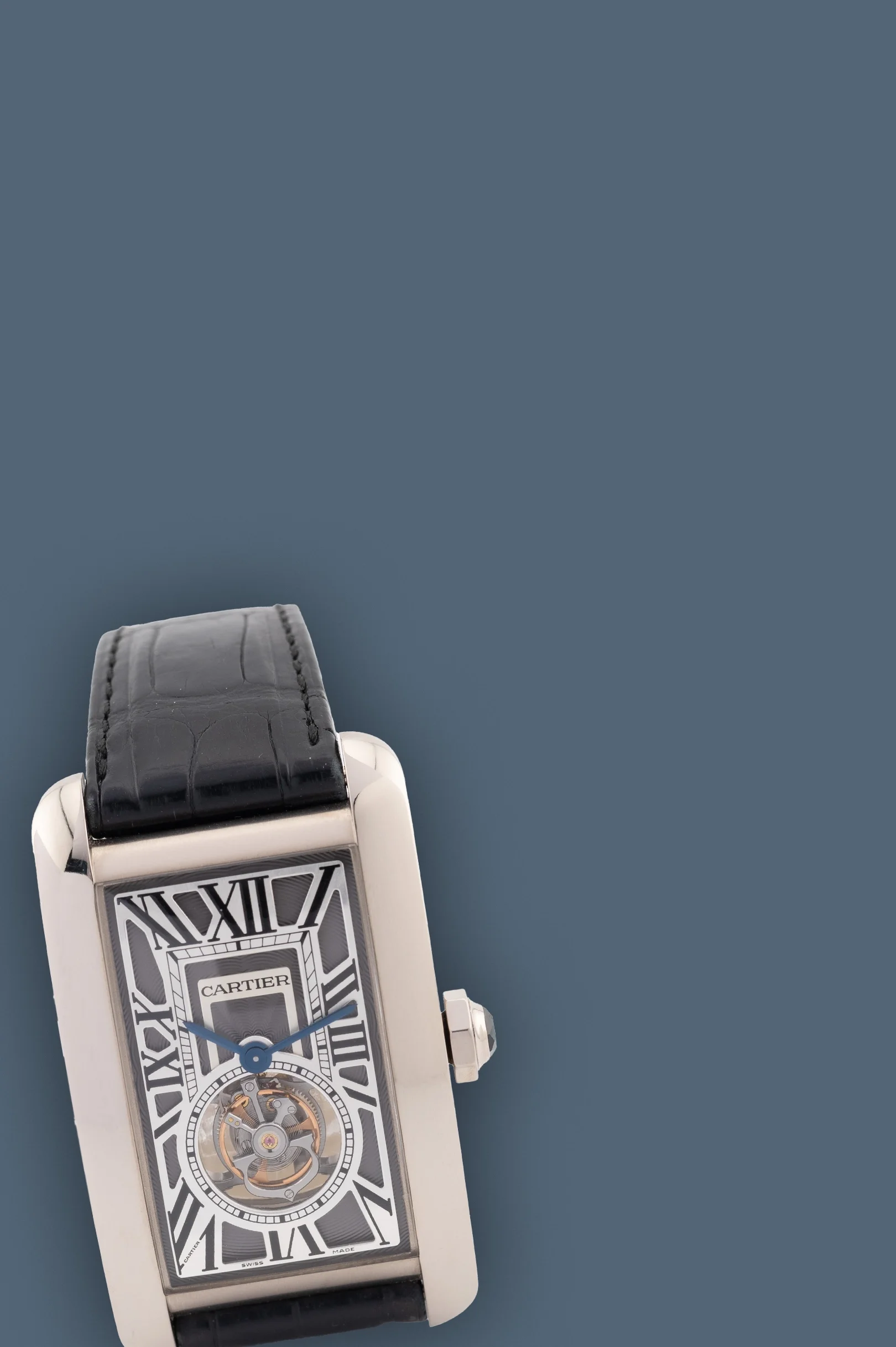
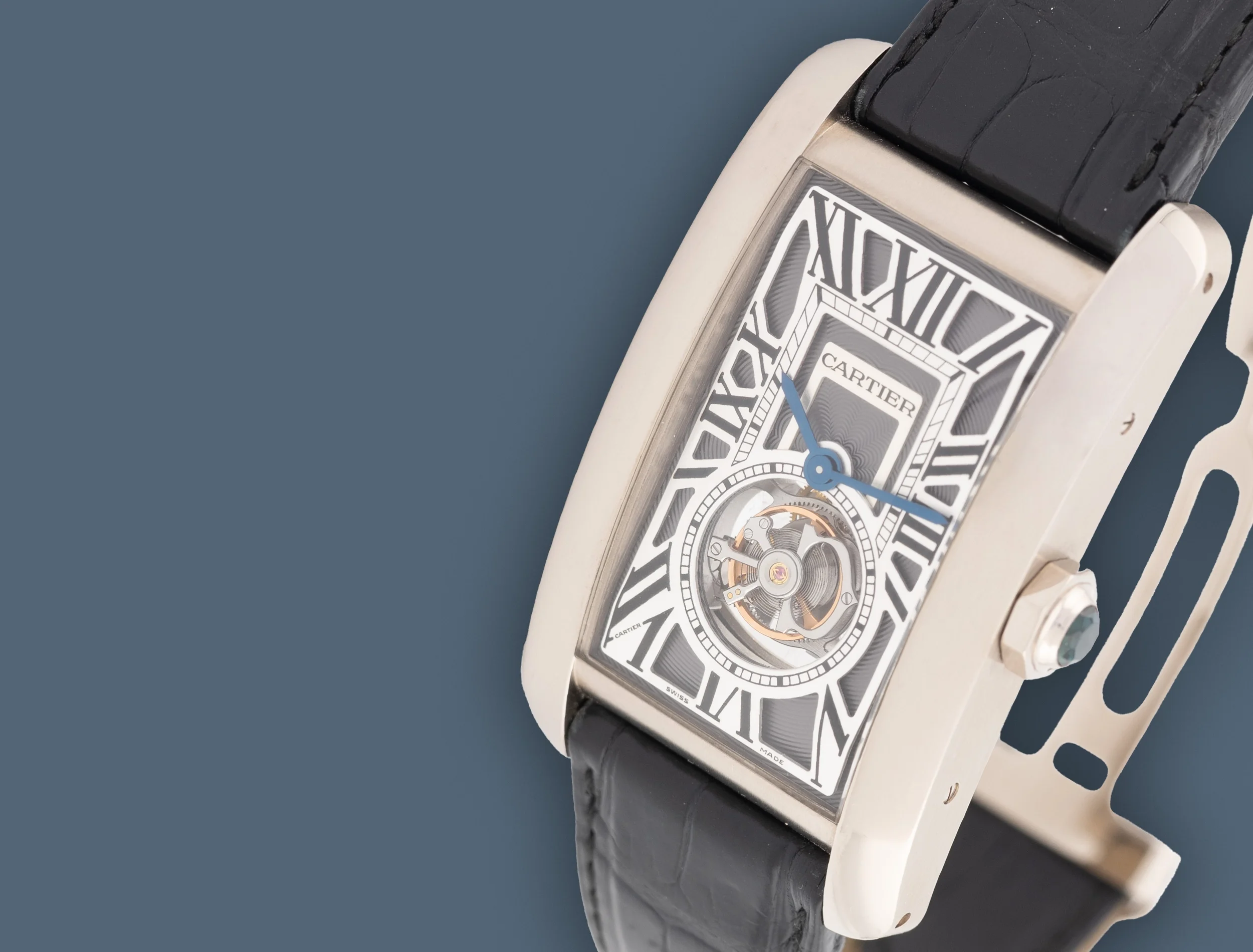
The circular opening at six catches the eye first. Around it, the curved 18-karat white-gold case measures 51.5 by 31.5 mm, with long brancards that preserve the Américaine’s vertical emphasis. Closer inspection reveals two levels to the dial. A satin-finished, openworked grid carries the black Roman numerals and railway minute track above slate-grey guilloché. The pattern catches the light through the cutouts, and the minute track bends around the tourbillon before resuming its rectangular course.
-
Year:
2009 model introduction at SIHH.Case Material:
18-karat white gold, with an elongated, curved rectangular case and a faceted sapphire-set crown.Case Dimensions:
51.5 × 31.5 mm.Dial Description:
Slate-grey guilloché beneath a satin-finished, openworked grid with black Roman numerals and a railway minute track. Blued steel sword hands and a flying tourbillon at six o’clock.Crystal:
SapphireCase Back:
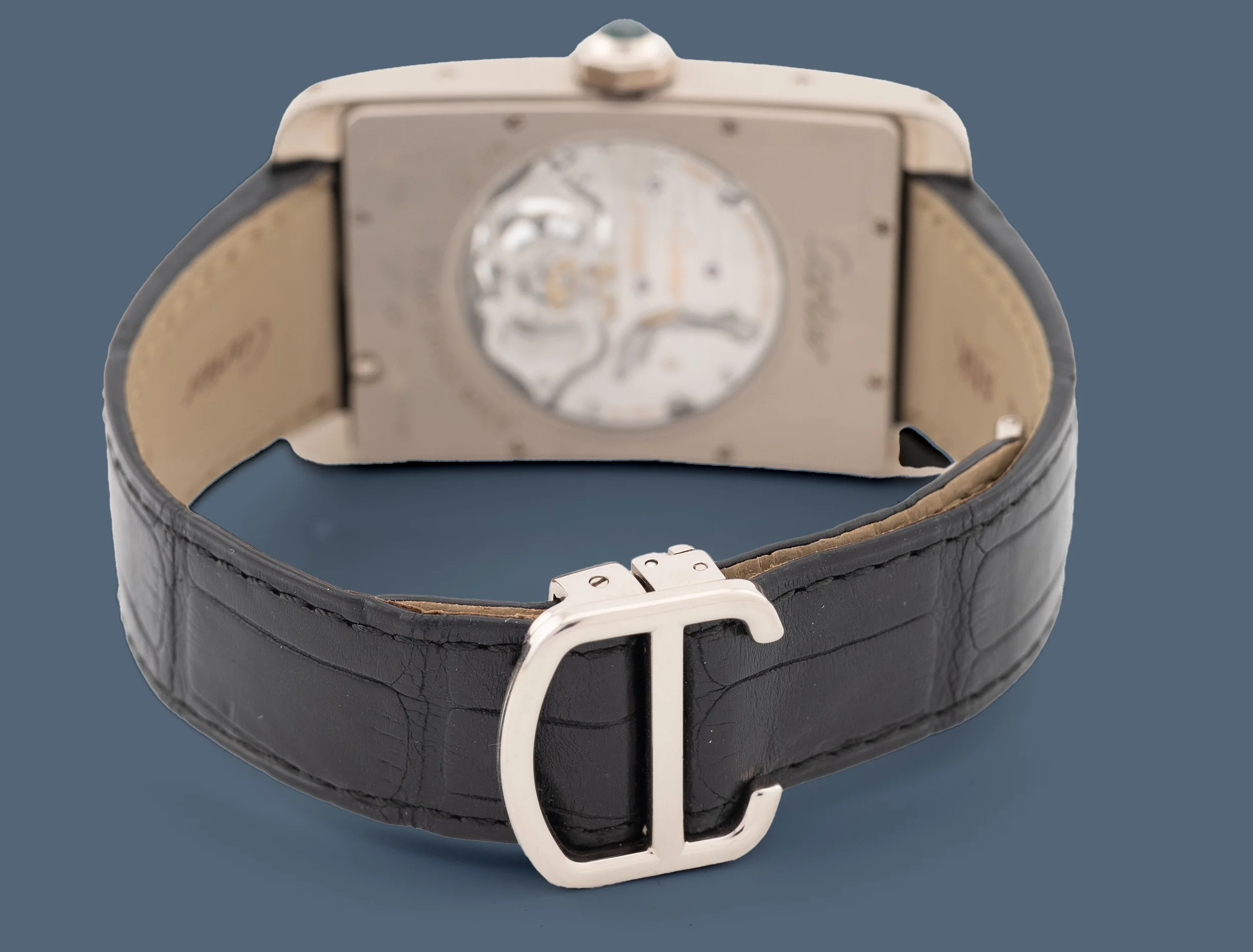
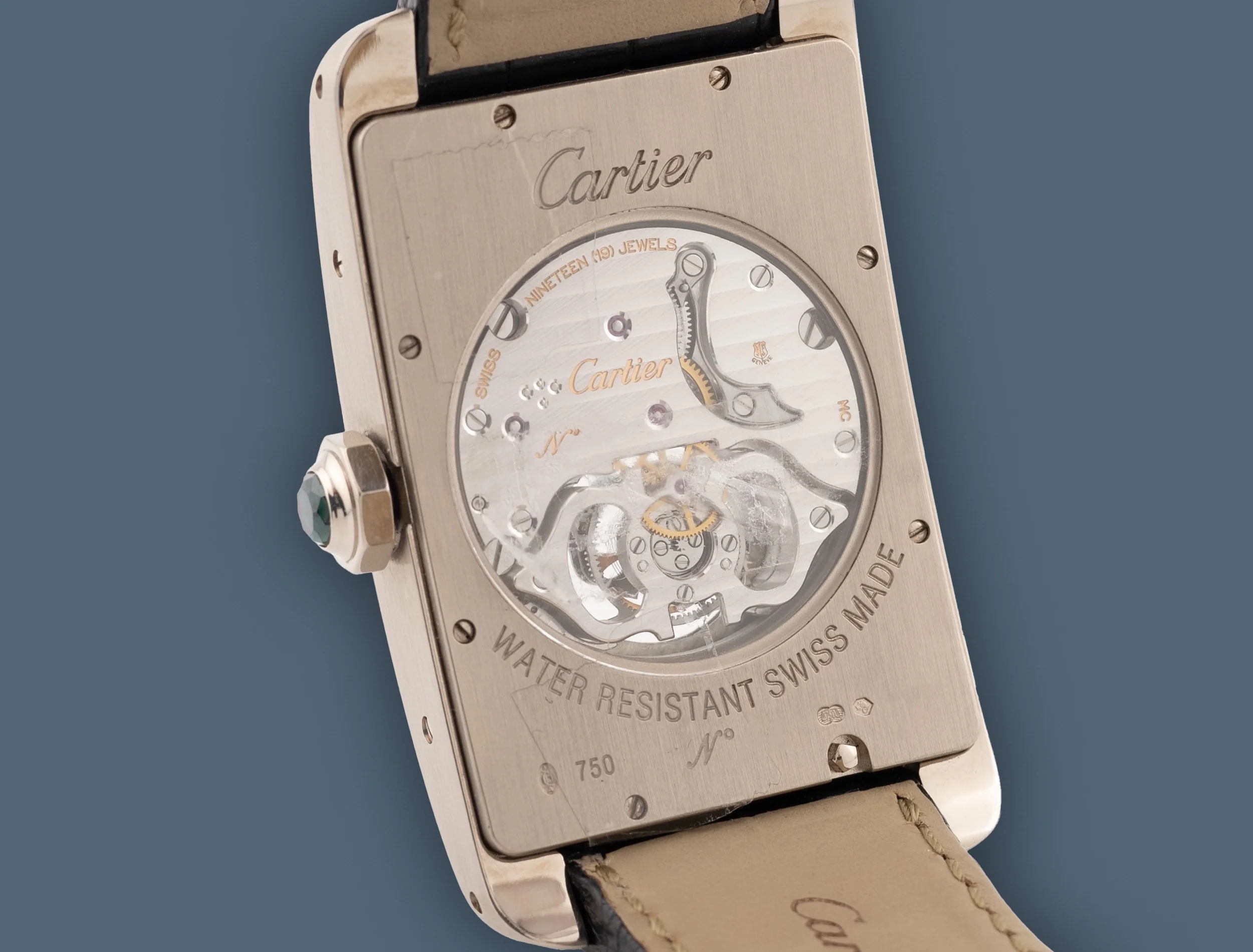
Sapphire display back secured by eight screws.Strap:
Crocodile StrapClasp:
18-karat white-gold Cartier folding claspWater Resistance:
30 m, as listed for the reference. -
Movement:
Cartier manufacture calibre 9452 MC, manually wound.Functions:
Central hours and minutes, with seconds indicated by the flying tourbillon at six o’clock.Tourbillon:
One-minute rotation. The carriage is supported from below, leaving the balance visible from the dial side. Its C-shaped cage serves as the seconds indicator.Power Reserve:
Approximately 50 hours.Frequency:
21,600 vibrations per hour (3 Hz).Components:
142 components, including 19 jewels.Movement Thickness:
4.5 mm, rising to 5.45 mm at the tourbillon.Certification:
Poinçon de Genève (Geneva Seal).The 9452 MC was Cartier’s first calibre to carry the Geneva Seal. It debuted in the Ballon Bleu in 2008 and reached the Tank Américaine in 2009. In the W2620007, the detail to look for is the rotating Cartier C against the circular seconds scale. The carriage itself tells the seconds, giving the signature a practical role on the dial.
-
Excellent condition. Open papers. No box.
The 9452 MC and the Cartier C
Cartier announced the hand-wound 9452 MC as it established a Geneva workshop for assembly and adjustment. The flying tourbillon is supported from beneath, leaving the balance and carriage unobstructed from the dial side. Its carriage turns once a minute, with the Cartier C serving as the seconds indicator. The movement offers about 50 hours of reserve and carries the Geneva Seal, visible through the sapphire back. Published specifications identify the same 19-jewel, 142-component calibre as the 2008 Ballon Bleu, with no documented Tank-specific mechanical revision.
The Américaine in Cartier’s Tourbillon Lineage
The pink-gold W2620008 accompanied the white-gold reference in 2009. Cartier subsequently returned to the 9452 MC in the Clé in 2015 and the Drive in 2016. The Américaine itself was redrawn in 2023 with a finer case profile. The white-gold tourbillon belongs to a more expansive moment in that history. Its most characteristic detail remains the way the railway track, a familiar Tank feature, makes room for the turning carriage.
A Numbered White-Gold Tank
The case geometry and combination of complications reflect the ambition of Roger Dubuis’ early independent period. There is a willingness here to give complicated watchmaking a strong visual identity.
The mother-of-pearl dial adds another layer. Its surface changes with the light, bringing variation to an already expressive arrangement of scales and indications.