
From Rectangle to Tonneau
Richard Mille presented the RM17-01 at the 2017 Salon International de la Haute Horlogerie in Geneva, where it appeared with a white ceramic bezel and a titanium middle case. Its predecessor, introduced in 2011, was the brand’s first rectangular tourbillon.
The RM17-01 brought that watch’s slim, hand-wound movement into Richard Mille’s signature barrel-shaped case, keeping the curved fit while giving the watch a fuller profile.
Richard Mille Manual Winding Tourbillon
Reference RM17-01 | Titanium
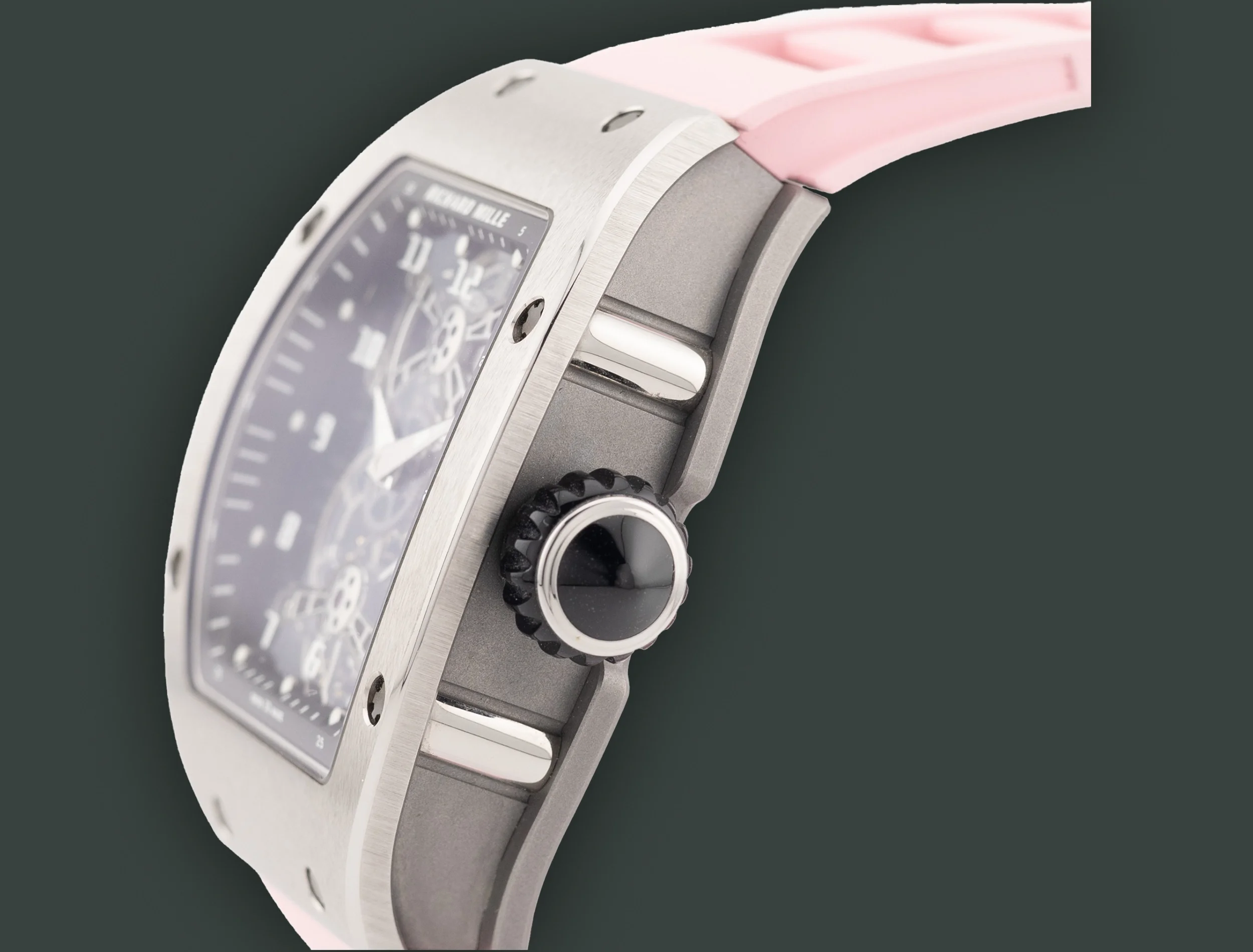
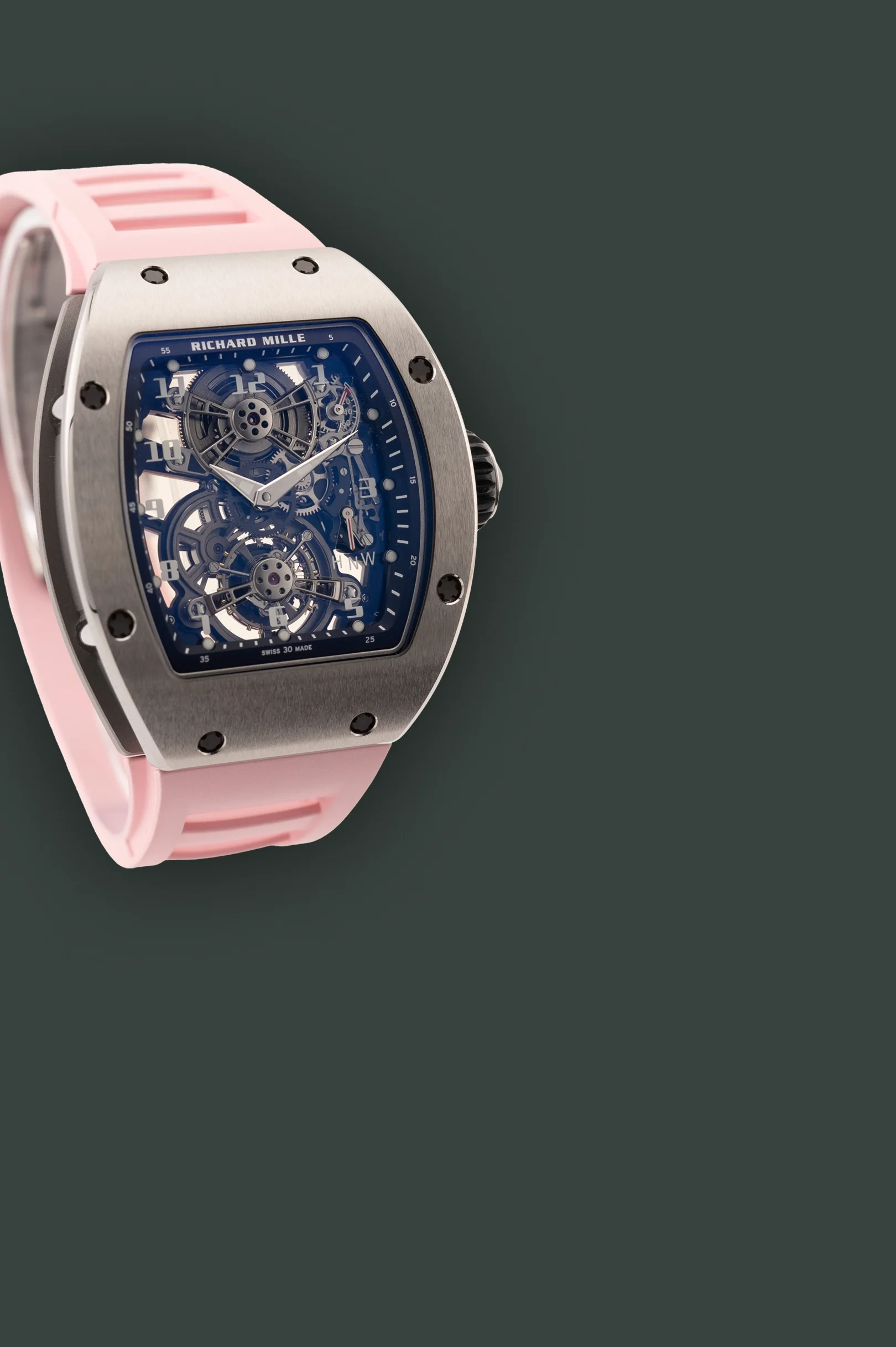
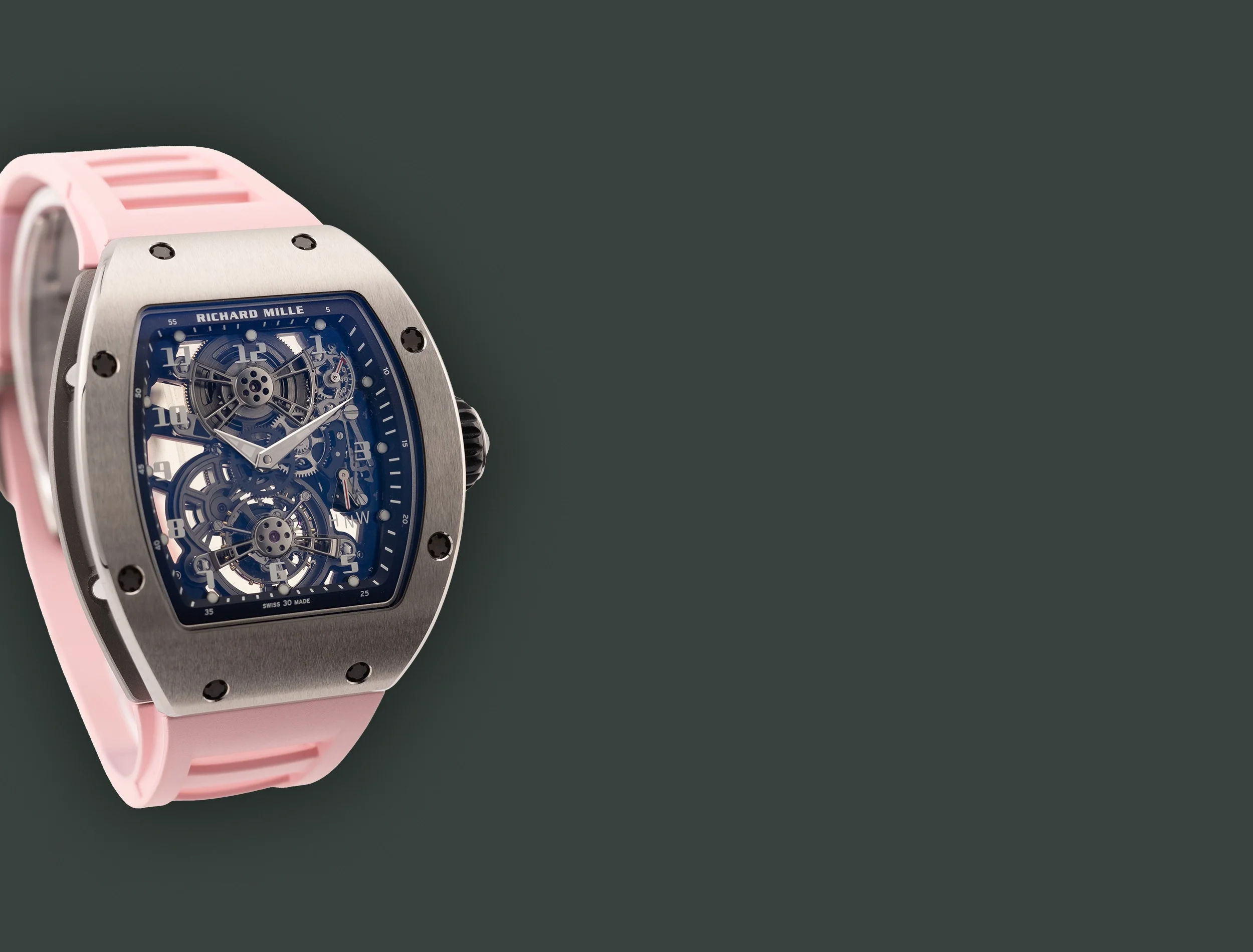
The grade 5 titanium case measures approximately 48 mm long by 40 mm wide. Its curved profile follows the wrist, and the lightness of the alloy tempers the presence of the broad tonneau shape. The cool grey of the case carries through to the openworked movement. As the watch turns, light travels along the bezel and catches the polished edges of the bridges, revealing the depth of the dial.
-
Year:
To be confirmed.Case:
Titanium, with a tonneau-shaped case.Case diameter:
Approximately 48 × 40 × 13 mmDial description:
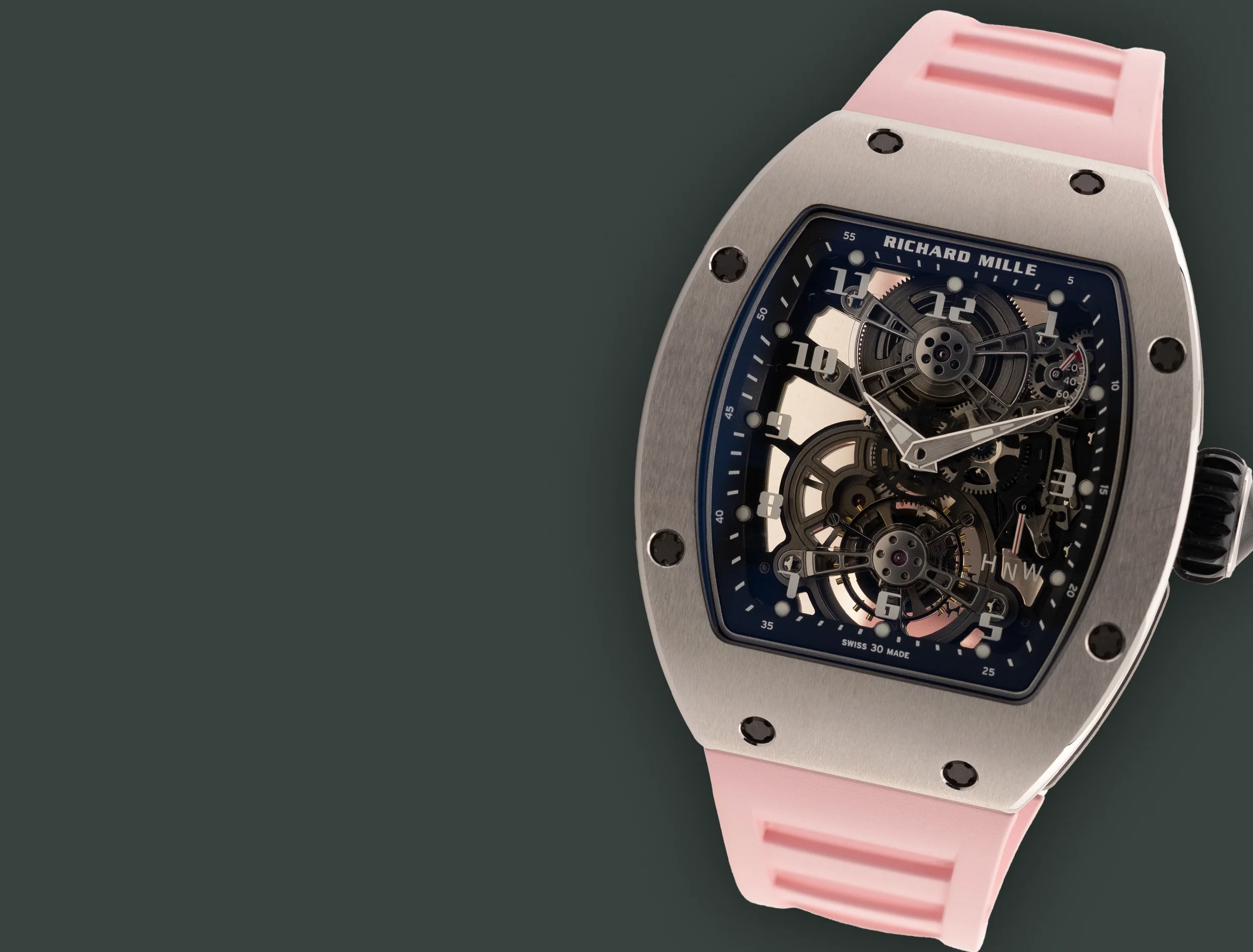
Openworked sapphire dial revealing the manually wound movement, with a visible tourbillon, power-reserve indicator at 2 o’clock and function indicator at 4 o’clock.Crystal: Sapphire
Case back:
Transparent sapphire exhibition case back.Strap:
RubberClasp:
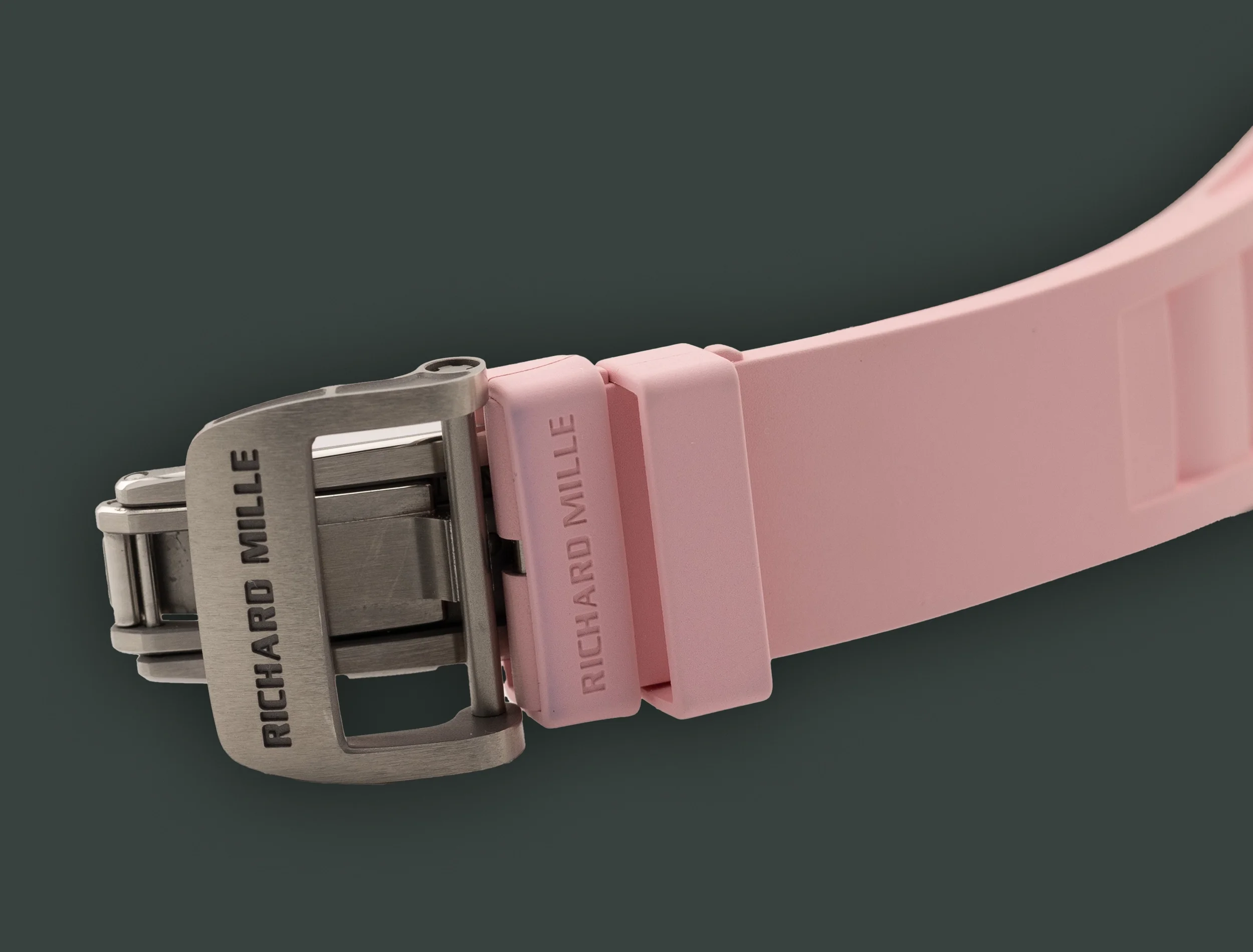
Richard Mille titanium folding clasp with the rubber-strap configurationWater resistance:
50 metres / 5 bar, as originally specified. -
Calibre:
RM17-01, as designated in Richard Mille’s technical specifications.Winding:
Skeletonised mechanical movement with manual winding.Functions:
Hours, minutes, power-reserve indicator and crown-function indicator.Tourbillon:
Tourbillon regulator with a cage measuring 12.30 mm in diameter.Power Reserve:
Approximately 70 hours (±10%).Frequency:
21,600 vibrations per hour / 3 Hz.Jewels:
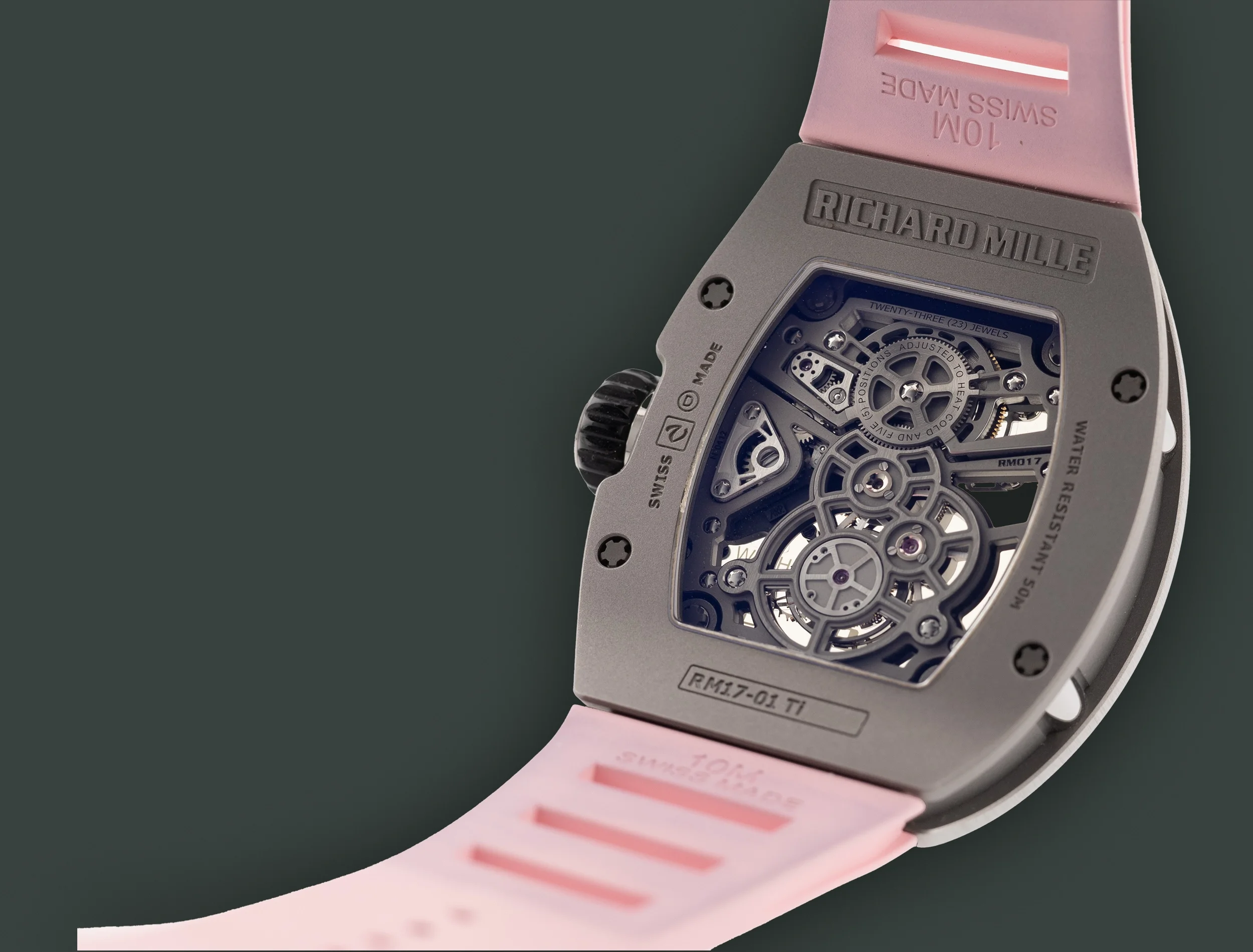
23, set in white-gold chatons.Movement dimensions:
31.20 × 29.45 mm; 4.65 mBaseplate and bridges:
Skeletonised grade 5 titanium.Balance:
Free-sprung, variable-inertia balance with four adjustment screws.Power-reserve display:
At 2 o’clock, showing the remaining energy before winding is needed.Crown-function display:
At 4 o’clock, indicating winding, neutral or hand-setting mode.Winding protection:
A torque-limiting crown and blocking-gear safety system help protect against overwinding.Fast-rotating barrel:
Completes one revolution every six hours, designed to improve power delivery and regularity.Tourbillon bearing detail:
A ceramic endstone helps reduce wear.Finishing:
Hand-bevelled and polished components, burnished pivots and carefully finished wheels. -
Excellent condition. Complete with box and papers.
The Hand-Wound Calibre
Richard Mille’s technical specification lists the calibre as RM17-01. At 4.65 mm thick, it offers around 70 hours of power reserve. Its baseplate and bridges are made from grade 5 titanium, with hand-polished bevels and 23 jewels set in white-gold settings.
The movement sits on rubber mounts inside the case, an arrangement that dispenses with a conventional casing ring.
The Open Dial
The dial retained the earlier watch’s displays. The central hands show hours and minutes, with the tourbillon turning at six o’clock. At two, a scale shows how much running time remains.
At four, a small hand indicates whether the crown is in winding, neutral or time-setting position. The openworked construction leaves the bridges and gear train visible between these indications.
Later Editions and the RM17-02
In September 2019, a ten-piece Carbon TPT edition gave the RM17-01 a dark, rippled case. A brown cermet version with a red-gold caseband followed in 2022. The family continued in 2024 with the RM17-02, first in a 30-piece White Quartz TPT edition and later in titanium.
In the titanium RM17-01, the most revealing detail is how light moves across the watch. It catches the curve of the bezel first, then picks out the polished edges of the bridges around the turning tourbillon.